Recently, I have open-sourced an AI emotional companion product based on openclaw, called opensoul.
On this platform, you can create a "soulmate" that matches your personality, and configure it with the skills, tools you want it to have, as well as the platforms it can integrate with (such as Telegram, Discord, etc.). You can even create group chats, invite multiple agents and your friends to chat about recent events, discuss projects together, and so on.
On the one hand, I hope it can better accompany you in daily life by virtue of its unique memory mechanism, self-feedback and iteration mechanism, and the modeling of users' emotions. On the other hand, I also hope it can help you better handle your work with its unique skills, tools and ability to deal with complex task scenarios.
Although the entire product has taken shape, I think there are still many areas that need adjustment and optimization. I also hope to rely on the strength of the community to do a good job in AI emotional companionship.
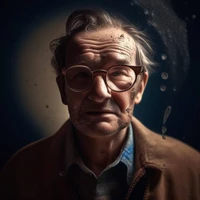
Next level Realism with Qwen Image is now possible after new realism LoRA workflow - Top images are new realism workflow - Bottom ones are older default - Full tutorial published - 4+4 Steps only
This is a full comprehensive step-by-step tutorial for how to train Qwen Image models. This tutorial covers how to do LoRA training and full Fine-Tuning / DreamBooth training on Qwen Image models. It covers both the Qwen Image base model and the Qwen Image Edit Plus 2509 model. This tutorial is the product of 21 days of full R&D, costing over $800 in cloud services to find the best configurations for training. Furthermore, we have developed an amazing, ultra-easy-to-use Gradio app to use the legendary Kohya Musubi Tuner trainer with ease. You will be able to train locally on your Windows computer with GPUs with as little as 6 GB of VRAM for both LoRA and Fine-Tuning.