new

Get trending papers in your email inbox!

Subscribe

Daily Papers

byAK and the research community

Apr 29

Friends-MMC: A Dataset for Multi-modal Multi-party Conversation Understanding

Multi-modal multi-party conversation (MMC) is a less studied yet important topic of research due to that it well fits real-world scenarios and thus potentially has more widely-used applications. Compared with the traditional multi-modal conversations, MMC requires stronger character-centered understanding abilities as there are many interlocutors appearing in both the visual and textual context. To facilitate the study of this problem, we present Friends-MMC in this paper, an MMC dataset that contains 24,000+ unique utterances paired with video context. To explore the character-centered understanding of the dialogue, we also annotate the speaker of each utterance, the names and bounding bboxes of faces that appear in the video. Based on this Friends-MMC dataset, we further study two fundamental MMC tasks: conversation speaker identification and conversation response prediction, both of which have the multi-party nature with the video or image as visual context. For conversation speaker identification, we demonstrate the inefficiencies of existing methods such as pre-trained models, and propose a simple yet effective baseline method that leverages an optimization solver to utilize the context of two modalities to achieve better performance. For conversation response prediction, we fine-tune generative dialogue models on Friend-MMC, and analyze the benefits of speaker information. The code and dataset is publicly available at https://github.com/yellow-binary-tree/Friends-MMC and thus we call for more attention on modeling speaker information when understanding conversations.


  • 6 authors
·
Dec 23, 2024 2

Enabling Chatbots with Eyes and Ears: An Immersive Multimodal Conversation System for Dynamic Interactions

As chatbots continue to evolve toward human-like, real-world, interactions, multimodality remains an active area of research and exploration. So far, efforts to integrate multimodality into chatbots have primarily focused on image-centric tasks, such as visual dialogue and image-based instructions, placing emphasis on the "eyes" of human perception while neglecting the "ears", namely auditory aspects. Moreover, these studies often center around static interactions that focus on discussing the modality rather than naturally incorporating it into the conversation, which limits the richness of simultaneous, dynamic engagement. Furthermore, while multimodality has been explored in multi-party and multi-session conversations, task-specific constraints have hindered its seamless integration into dynamic, natural conversations. To address these challenges, this study aims to equip chatbots with "eyes and ears" capable of more immersive interactions with humans. As part of this effort, we introduce a new multimodal conversation dataset, Multimodal Multi-Session Multi-Party Conversation (M^3C), and propose a novel multimodal conversation model featuring multimodal memory retrieval. Our model, trained on the M^3C, demonstrates the ability to seamlessly engage in long-term conversations with multiple speakers in complex, real-world-like settings, effectively processing visual and auditory inputs to understand and respond appropriately. Human evaluations highlight the model's strong performance in maintaining coherent and dynamic interactions, demonstrating its potential for advanced multimodal conversational agents.

  • 5 authors
·
May 31, 2025

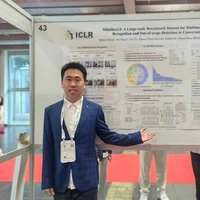
MIntRec2.0: A Large-scale Benchmark Dataset for Multimodal Intent Recognition and Out-of-scope Detection in Conversations

Multimodal intent recognition poses significant challenges, requiring the incorporation of non-verbal modalities from real-world contexts to enhance the comprehension of human intentions. Existing benchmark datasets are limited in scale and suffer from difficulties in handling out-of-scope samples that arise in multi-turn conversational interactions. We introduce MIntRec2.0, a large-scale benchmark dataset for multimodal intent recognition in multi-party conversations. It contains 1,245 dialogues with 15,040 samples, each annotated within a new intent taxonomy of 30 fine-grained classes. Besides 9,304 in-scope samples, it also includes 5,736 out-of-scope samples appearing in multi-turn contexts, which naturally occur in real-world scenarios. Furthermore, we provide comprehensive information on the speakers in each utterance, enriching its utility for multi-party conversational research. We establish a general framework supporting the organization of single-turn and multi-turn dialogue data, modality feature extraction, multimodal fusion, as well as in-scope classification and out-of-scope detection. Evaluation benchmarks are built using classic multimodal fusion methods, ChatGPT, and human evaluators. While existing methods incorporating nonverbal information yield improvements, effectively leveraging context information and detecting out-of-scope samples remains a substantial challenge. Notably, large language models exhibit a significant performance gap compared to humans, highlighting the limitations of machine learning methods in the cognitive intent understanding task. We believe that MIntRec2.0 will serve as a valuable resource, providing a pioneering foundation for research in human-machine conversational interactions, and significantly facilitating related applications. The full dataset and codes are available at https://github.com/thuiar/MIntRec2.0.

  • 9 authors
·
Mar 16, 2024

WavChat: A Survey of Spoken Dialogue Models

Recent advancements in spoken dialogue models, exemplified by systems like GPT-4o, have captured significant attention in the speech domain. Compared to traditional three-tier cascaded spoken dialogue models that comprise speech recognition (ASR), large language models (LLMs), and text-to-speech (TTS), modern spoken dialogue models exhibit greater intelligence. These advanced spoken dialogue models not only comprehend audio, music, and other speech-related features, but also capture stylistic and timbral characteristics in speech. Moreover, they generate high-quality, multi-turn speech responses with low latency, enabling real-time interaction through simultaneous listening and speaking capability. Despite the progress in spoken dialogue systems, there is a lack of comprehensive surveys that systematically organize and analyze these systems and the underlying technologies. To address this, we have first compiled existing spoken dialogue systems in the chronological order and categorized them into the cascaded and end-to-end paradigms. We then provide an in-depth overview of the core technologies in spoken dialogue models, covering aspects such as speech representation, training paradigm, streaming, duplex, and interaction capabilities. Each section discusses the limitations of these technologies and outlines considerations for future research. Additionally, we present a thorough review of relevant datasets, evaluation metrics, and benchmarks from the perspectives of training and evaluating spoken dialogue systems. We hope this survey will contribute to advancing both academic research and industrial applications in the field of spoken dialogue systems. The related material is available at https://github.com/jishengpeng/WavChat.

  • 19 authors
·
Nov 14, 2024

Open-Source Large Language Models as Multilingual Crowdworkers: Synthesizing Open-Domain Dialogues in Several Languages With No Examples in Targets and No Machine Translation

The prevailing paradigm in the domain of Open-Domain Dialogue agents predominantly focuses on the English language, encompassing both models and datasets. Furthermore, the financial and temporal investments required for crowdsourcing such datasets for finetuning are substantial, particularly when multiple languages are involved. Fortunately, advancements in Large Language Models (LLMs) have unveiled a plethora of possibilities across diverse tasks. Specifically, instruction-tuning has enabled LLMs to execute tasks based on natural language instructions, occasionally surpassing the performance of human crowdworkers. Additionally, these models possess the capability to function in various languages within a single thread. Consequently, to generate new samples in different languages, we propose leveraging these capabilities to replicate the data collection process. We introduce a pipeline for generating Open-Domain Dialogue data in multiple Target Languages using LLMs, with demonstrations provided in a unique Source Language. By eschewing explicit Machine Translation in this approach, we enhance the adherence to language-specific nuances. We apply this methodology to the PersonaChat dataset. To enhance the openness of generated dialogues and mimic real life scenarii, we added the notion of speech events corresponding to the type of conversation the speakers are involved in and also that of common ground which represents the premises of a conversation.

  • 4 authors
·
Mar 5, 2025

TellWhisper: Tell Whisper Who Speaks When

Multi-speaker automatic speech recognition (MASR) aims to predict ''who spoke when and what'' from multi-speaker speech, a key technology for multi-party dialogue understanding. However, most existing approaches decouple temporal modeling and speaker modeling when addressing ''when'' and ''who'': some inject speaker cues before encoding (e.g., speaker masking), which can cause irreversible information loss; others fuse identity by mixing speaker posteriors after encoding, which may entangle acoustic content with speaker identity. This separation is brittle under rapid turn-taking and overlapping speech, often leading to degraded performance. To address these limitations, we propose TellWhisper, a unified framework that jointly models speaker identity and temporal within the speech encoder. Specifically, we design TS-RoPE, a time-speaker rotary positional encoding: time coordinates are derived from frame indices, while speaker coordinates are derived from speaker activity and pause cues. By applying region-specific rotation angles, the model explicitly captures per-speaker continuity, speaker-turn transitions, and state dynamics, enabling the attention mechanism to simultaneously attend to ''when'' and ''who''. Moreover, to estimate frame-level speaker activity, we develop Hyper-SD, which casts speaker classification in hyperbolic space to enhance inter-class separation and refine speaker-activity estimates. Extensive experiments demonstrate the effectiveness of the proposed approach.

  • 5 authors
·
Jan 7

Parrot: Enhancing Multi-Turn Chat Models by Learning to Ask Questions

Impressive progress has been made on chat models based on Large Language Models (LLMs) recently; however, there is a noticeable lag in multi-turn conversations between open-source chat models (e.g., Alpaca and Vicuna) and the leading chat models (e.g., ChatGPT and GPT-4). Through a series of analyses, we attribute the lag to the lack of enough high-quality multi-turn instruction-tuning data. The available instruction-tuning data for the community are either single-turn conversations or multi-turn ones with certain issues, such as non-human-like instructions, less detailed responses, or rare topic shifts. In this paper, we address these challenges by introducing Parrot, a highly scalable solution designed to automatically generate high-quality instruction-tuning data, which are then used to enhance the effectiveness of chat models in multi-turn conversations. Specifically, we start by training the Parrot-Ask model, which is designed to emulate real users in generating instructions. We then utilize Parrot-Ask to engage in multi-turn conversations with ChatGPT across a diverse range of topics, resulting in a collection of 40K high-quality multi-turn dialogues (Parrot-40K). These data are subsequently employed to train a chat model that we have named Parrot-Chat. We demonstrate that the dialogues gathered from Parrot-Ask markedly outperform existing multi-turn instruction-following datasets in critical metrics, including topic diversity, number of turns, and resemblance to human conversation. With only 40K training examples, Parrot-Chat achieves strong performance against other 13B open-source models across a range of instruction-following benchmarks, and particularly excels in evaluations of multi-turn capabilities. We make all codes, datasets, and two versions of the Parrot-Ask model based on LLaMA2-13B and KuaiYii-13B available at https://github.com/kwai/KwaiYii/Parrot.

  • 8 authors
·
Oct 11, 2023

Fun-Audio-Chat Technical Report

Recent advancements in joint speech-text models show great potential for seamless voice interactions. However, existing models face critical challenges: temporal resolution mismatch between speech tokens (25Hz) and text tokens (~3Hz) dilutes semantic information, incurs high computational costs, and causes catastrophic forgetting of text LLM knowledge. We introduce Fun-Audio-Chat, a Large Audio Language Model addressing these limitations via two innovations from our previous work DrVoice. First, Dual-Resolution Speech Representations (DRSR): the Shared LLM processes audio at efficient 5Hz (via token grouping), while the Speech Refined Head generates high-quality tokens at 25Hz, balancing efficiency (~50% GPU reduction) and quality. Second, Core-Cocktail Training, a two-stage fine-tuning with intermediate merging that mitigates catastrophic forgetting. We then apply Multi-Task DPO Training to enhance robustness, audio understanding, instruction-following and voice empathy. This multi-stage post-training enables Fun-Audio-Chat to retain text LLM knowledge while gaining powerful audio understanding, reasoning, and generation. Unlike recent LALMs requiring large-scale audio-text pre-training, Fun-Audio-Chat leverages pre-trained models and extensive post-training. Fun-Audio-Chat 8B and MoE 30B-A3B achieve competitive performance on Speech-to-Text and Speech-to-Speech tasks, ranking top among similar-scale models on Spoken QA benchmarks. They also achieve competitive to superior performance on Audio Understanding, Speech Function Calling, Instruction-Following and Voice Empathy. We develop Fun-Audio-Chat-Duplex, a full-duplex variant with strong performance on Spoken QA and full-duplex interactions. We open-source Fun-Audio-Chat-8B with training and inference code, and provide an interactive demo.

  • 12 authors
·
Dec 23, 2025

MultiWOZ 2.1: A Consolidated Multi-Domain Dialogue Dataset with State Corrections and State Tracking Baselines

MultiWOZ 2.0 (Budzianowski et al., 2018) is a recently released multi-domain dialogue dataset spanning 7 distinct domains and containing over 10,000 dialogues. Though immensely useful and one of the largest resources of its kind to-date, MultiWOZ 2.0 has a few shortcomings. Firstly, there is substantial noise in the dialogue state annotations and dialogue utterances which negatively impact the performance of state-tracking models. Secondly, follow-up work (Lee et al., 2019) has augmented the original dataset with user dialogue acts. This leads to multiple co-existent versions of the same dataset with minor modifications. In this work we tackle the aforementioned issues by introducing MultiWOZ 2.1. To fix the noisy state annotations, we use crowdsourced workers to re-annotate state and utterances based on the original utterances in the dataset. This correction process results in changes to over 32% of state annotations across 40% of the dialogue turns. In addition, we fix 146 dialogue utterances by canonicalizing slot values in the utterances to the values in the dataset ontology. To address the second problem, we combined the contributions of the follow-up works into MultiWOZ 2.1. Hence, our dataset also includes user dialogue acts as well as multiple slot descriptions per dialogue state slot. We then benchmark a number of state-of-the-art dialogue state tracking models on the MultiWOZ 2.1 dataset and show the joint state tracking performance on the corrected state annotations. We are publicly releasing MultiWOZ 2.1 to the community, hoping that this dataset resource will allow for more effective models across various dialogue subproblems to be built in the future.

  • 10 authors
·
Jul 2, 2019

Mixed-Session Conversation with Egocentric Memory

Recently introduced dialogue systems have demonstrated high usability. However, they still fall short of reflecting real-world conversation scenarios. Current dialogue systems exhibit an inability to replicate the dynamic, continuous, long-term interactions involving multiple partners. This shortfall arises because there have been limited efforts to account for both aspects of real-world dialogues: deeply layered interactions over the long-term dialogue and widely expanded conversation networks involving multiple participants. As the effort to incorporate these aspects combined, we introduce Mixed-Session Conversation, a dialogue system designed to construct conversations with various partners in a multi-session dialogue setup. We propose a new dataset called MiSC to implement this system. The dialogue episodes of MiSC consist of 6 consecutive sessions, with four speakers (one main speaker and three partners) appearing in each episode. Also, we propose a new dialogue model with a novel memory management mechanism, called Egocentric Memory Enhanced Mixed-Session Conversation Agent (EMMA). EMMA collects and retains memories from the main speaker's perspective during conversations with partners, enabling seamless continuity in subsequent interactions. Extensive human evaluations validate that the dialogues in MiSC demonstrate a seamless conversational flow, even when conversation partners change in each session. EMMA trained with MiSC is also evaluated to maintain high memorability without contradiction throughout the entire conversation.

  • 3 authors
·
Oct 3, 2024 2

Towards Building Large Scale Multimodal Domain-Aware Conversation Systems

While multimodal conversation agents are gaining importance in several domains such as retail, travel etc., deep learning research in this area has been limited primarily due to the lack of availability of large-scale, open chatlogs. To overcome this bottleneck, in this paper we introduce the task of multimodal, domain-aware conversations, and propose the MMD benchmark dataset. This dataset was gathered by working in close coordination with large number of domain experts in the retail domain. These experts suggested various conversations flows and dialog states which are typically seen in multimodal conversations in the fashion domain. Keeping these flows and states in mind, we created a dataset consisting of over 150K conversation sessions between shoppers and sales agents, with the help of in-house annotators using a semi-automated manually intense iterative process. With this dataset, we propose 5 new sub-tasks for multimodal conversations along with their evaluation methodology. We also propose two multimodal neural models in the encode-attend-decode paradigm and demonstrate their performance on two of the sub-tasks, namely text response generation and best image response selection. These experiments serve to establish baseline performance and open new research directions for each of these sub-tasks. Further, for each of the sub-tasks, we present a `per-state evaluation' of 9 most significant dialog states, which would enable more focused research into understanding the challenges and complexities involved in each of these states.

  • 3 authors
·
Apr 1, 2017

Adaptive Multi-Agent Response Refinement in Conversational Systems

Large Language Models (LLMs) have demonstrated remarkable success in conversational systems by generating human-like responses. However, they can fall short, especially when required to account for personalization or specific knowledge. In real-life settings, it is impractical to rely on users to detect these errors and request a new response. One way to address this problem is to refine the response before returning it to the user. While existing approaches focus on refining responses within a single LLM, this method struggles to consider diverse aspects needed for effective conversations. In this work, we propose refining responses through a multi-agent framework, where each agent is assigned a specific role for each aspect. We focus on three key aspects crucial to conversational quality: factuality, personalization, and coherence. Each agent is responsible for reviewing and refining one of these aspects, and their feedback is then merged to improve the overall response. To enhance collaboration among them, we introduce a dynamic communication strategy. Instead of following a fixed sequence of agents, our approach adaptively selects and coordinates the most relevant agents based on the specific requirements of each query. We validate our framework on challenging conversational datasets, demonstrating that ours significantly outperforms relevant baselines, particularly in tasks involving knowledge or user's persona, or both.

amazon Amazon
·
Nov 11, 2025 2

Beyond the Turn-Based Game: Enabling Real-Time Conversations with Duplex Models

As large language models (LLMs) increasingly permeate daily lives, there is a growing demand for real-time interactions that mirror human conversations. Traditional turn-based chat systems driven by LLMs prevent users from verbally interacting with the system while it is generating responses. To overcome these limitations, we adapt existing LLMs to duplex models so that these LLMs can listen for users while generating output and dynamically adjust themselves to provide users with instant feedback. % such as in response to interruptions. Specifically, we divide the queries and responses of conversations into several time slices and then adopt a time-division-multiplexing (TDM) encoding-decoding strategy to pseudo-simultaneously process these slices. Furthermore, to make LLMs proficient enough to handle real-time conversations, we build a fine-tuning dataset consisting of alternating time slices of queries and responses as well as covering typical feedback types in instantaneous interactions. Our experiments show that although the queries and responses of conversations are segmented into incomplete slices for processing, LLMs can preserve their original performance on standard benchmarks with a few fine-tuning steps on our dataset. Automatic and human evaluation indicate that duplex models make user-AI interactions more natural and human-like, and greatly improve user satisfaction compared to vanilla LLMs. Our duplex model and dataset will be released.

  • 9 authors
·
Jun 21, 2024 2

GroupGPT: A Token-efficient and Privacy-preserving Agentic Framework for Multi-User Chat Assistant

Recent advances in large language models (LLMs) have enabled increasingly capable chatbots. However, most existing systems focus on single-user settings and do not generalize well to multi-user group chats, where agents require more proactive and accurate intervention under complex, evolving contexts. Existing approaches typically rely on LLMs for both reasoning and generation, leading to high token consumption, limited scalability, and potential privacy risks. To address these challenges, we propose GroupGPT, a token-efficient and privacy-preserving agentic framework for multi-user chat assistant. GroupGPT adopts a small-large model collaborative architecture to decouple intervention timing from response generation, enabling efficient and accurate decision-making. The framework also supports multimodal inputs, including memes, images, videos, and voice messages. We further introduce MUIR, a benchmark dataset for multi-user chat assistant intervention reasoning. MUIR contains 2,500 annotated group chat segments with intervention labels and rationales, supporting evaluation of timing accuracy and response quality. We evaluate a range of models on MUIR, from large language models to smaller counterparts. Extensive experiments demonstrate that GroupGPT produces accurate and well-timed responses, achieving an average score of 4.72/5.0 in LLM-based evaluation, and is well received by users across diverse group chat scenarios. Moreover, GroupGPT reduces token usage by up to 3 times compared to baseline methods, while providing privacy sanitization of user messages before cloud transmission. Code is available at: https://github.com/Eliot-Shen/GroupGPT .

  • 5 authors
·
Mar 1 2

Moshi: a speech-text foundation model for real-time dialogue

We introduce Moshi, a speech-text foundation model and full-duplex spoken dialogue framework. Current systems for spoken dialogue rely on pipelines of independent components, namely voice activity detection, speech recognition, textual dialogue and text-to-speech. Such frameworks cannot emulate the experience of real conversations. First, their complexity induces a latency of several seconds between interactions. Second, text being the intermediate modality for dialogue, non-linguistic information that modifies meaning -- such as emotion or non-speech sounds -- is lost in the interaction. Finally, they rely on a segmentation into speaker turns, which does not take into account overlapping speech, interruptions and interjections. Moshi solves these independent issues altogether by casting spoken dialogue as speech-to-speech generation. Starting from a text language model backbone, Moshi generates speech as tokens from the residual quantizer of a neural audio codec, while modeling separately its own speech and that of the user into parallel streams. This allows for the removal of explicit speaker turns, and the modeling of arbitrary conversational dynamics. We moreover extend the hierarchical semantic-to-acoustic token generation of previous work to first predict time-aligned text tokens as a prefix to audio tokens. Not only this "Inner Monologue" method significantly improves the linguistic quality of generated speech, but we also illustrate how it can provide streaming speech recognition and text-to-speech. Our resulting model is the first real-time full-duplex spoken large language model, with a theoretical latency of 160ms, 200ms in practice, and is available at https://github.com/kyutai-labs/moshi.

kyutai Kyutai
·
Sep 17, 2024 3

Large Language Models as Zero-shot Dialogue State Tracker through Function Calling

Large language models (LLMs) are increasingly prevalent in conversational systems due to their advanced understanding and generative capabilities in general contexts. However, their effectiveness in task-oriented dialogues (TOD), which requires not only response generation but also effective dialogue state tracking (DST) within specific tasks and domains, remains less satisfying. In this work, we propose a novel approach FnCTOD for solving DST with LLMs through function calling. This method improves zero-shot DST, allowing adaptation to diverse domains without extensive data collection or model tuning. Our experimental results demonstrate that our approach achieves exceptional performance with both modestly sized open-source and also proprietary LLMs: with in-context prompting it enables various 7B or 13B parameter models to surpass the previous state-of-the-art (SOTA) achieved by ChatGPT, and improves ChatGPT's performance beating the SOTA by 5.6% Avg. JGA. Individual model results for GPT-3.5 and GPT-4 are boosted by 4.8% and 14%, respectively. We also show that by fine-tuning on a small collection of diverse task-oriented dialogues, we can equip modestly sized models, specifically a 13B parameter LLaMA2-Chat model, with function-calling capabilities and DST performance comparable to ChatGPT while maintaining their chat capabilities. We plan to open-source experimental code and model.

  • 10 authors
·
Feb 16, 2024 3

OmniFlatten: An End-to-end GPT Model for Seamless Voice Conversation

Full-duplex spoken dialogue systems significantly advance over traditional turn-based dialogue systems, as they allow simultaneous bidirectional communication, closely mirroring human-human interactions. However, achieving low latency and natural interactions in full-duplex dialogue systems remains a significant challenge, especially considering human conversation dynamics such as interruptions, backchannels, and overlapping speech. In this paper, we introduce a novel End-to-End GPT-based model OmniFlatten for full-duplex conversation, capable of effectively modeling the complex behaviors inherent to natural conversations with low latency. To achieve full-duplex communication capabilities, we propose a multi-stage post-training scheme that progressively adapts a text-based large language model (LLM) backbone into a speech-text dialogue LLM, capable of generating text and speech in real time, without modifying the architecture of the backbone LLM. The training process comprises three stages: modality alignment, half-duplex dialogue learning, and full-duplex dialogue learning. Throughout all training stages, we standardize the data using a flattening operation, which allows us to unify the training methods and the model architecture across different modalities and tasks. Our approach offers a straightforward modeling technique and a promising research direction for developing efficient and natural end-to-end full-duplex spoken dialogue systems. Audio samples of dialogues generated by OmniFlatten can be found at this web site (https://omniflatten.github.io/).

  • 9 authors
·
Oct 23, 2024 1

Language Model Can Listen While Speaking

Dialogue serves as the most natural manner of human-computer interaction (HCI). Recent advancements in speech language models (SLM) have significantly enhanced speech-based conversational AI. However, these models are limited to turn-based conversation, lacking the ability to interact with humans in real-time spoken scenarios, for example, being interrupted when the generated content is not satisfactory. To address these limitations, we explore full duplex modeling (FDM) in interactive speech language models (iSLM), focusing on enhancing real-time interaction and, more explicitly, exploring the quintessential ability of interruption. We introduce a novel model design, namely listening-while-speaking language model (LSLM), an end-to-end system equipped with both listening and speaking channels. Our LSLM employs a token-based decoder-only TTS for speech generation and a streaming self-supervised learning (SSL) encoder for real-time audio input. LSLM fuses both channels for autoregressive generation and detects turn-taking in real time. Three fusion strategies -- early fusion, middle fusion, and late fusion -- are explored, with middle fusion achieving an optimal balance between speech generation and real-time interaction. Two experimental settings, command-based FDM and voice-based FDM, demonstrate LSLM's robustness to noise and sensitivity to diverse instructions. Our results highlight LSLM's capability to achieve duplex communication with minimal impact on existing systems. This study aims to advance the development of interactive speech dialogue systems, enhancing their applicability in real-world contexts.

  • 8 authors
·
Aug 5, 2024 6

A Multi-Agent Conversational Recommender System

Due to strong capabilities in conducting fluent, multi-turn conversations with users, Large Language Models (LLMs) have the potential to further improve the performance of Conversational Recommender System (CRS). Unlike the aimless chit-chat that LLM excels at, CRS has a clear target. So it is imperative to control the dialogue flow in the LLM to successfully recommend appropriate items to the users. Furthermore, user feedback in CRS can assist the system in better modeling user preferences, which has been ignored by existing studies. However, simply prompting LLM to conduct conversational recommendation cannot address the above two key challenges. In this paper, we propose Multi-Agent Conversational Recommender System (MACRS) which contains two essential modules. First, we design a multi-agent act planning framework, which can control the dialogue flow based on four LLM-based agents. This cooperative multi-agent framework will generate various candidate responses based on different dialogue acts and then choose the most appropriate response as the system response, which can help MACRS plan suitable dialogue acts. Second, we propose a user feedback-aware reflection mechanism which leverages user feedback to reason errors made in previous turns to adjust the dialogue act planning, and higher-level user information from implicit semantics. We conduct extensive experiments based on user simulator to demonstrate the effectiveness of MACRS in recommendation and user preferences collection. Experimental results illustrate that MACRS demonstrates an improvement in user interaction experience compared to directly using LLMs.

  • 6 authors
·
Feb 1, 2024

Beyond Single-Turn: A Survey on Multi-Turn Interactions with Large Language Models

Recent advancements in large language models (LLMs) have revolutionized their ability to handle single-turn tasks, yet real-world applications demand sophisticated multi-turn interactions. This survey provides a comprehensive review of recent advancements in evaluating and enhancing multi-turn interactions in LLMs. Focusing on task-specific scenarios, from instruction following in diverse domains such as math and coding to complex conversational engagements in roleplay, healthcare, education, and even adversarial jailbreak settings, we systematically examine the challenges of maintaining context, coherence, fairness, and responsiveness over prolonged dialogues. The paper organizes current benchmarks and datasets into coherent categories that reflect the evolving landscape of multi-turn dialogue evaluation. In addition, we review a range of enhancement methodologies under multi-turn settings, including model-centric strategies (contextual learning, supervised fine-tuning, reinforcement learning, and new architectures), external integration approaches (memory-augmented, retrieval-based methods, and knowledge graph), and agent-based techniques for collaborative interactions. Finally, we discuss open challenges and propose future directions for research to further advance the robustness and effectiveness of multi-turn interactions in LLMs. Related resources and papers are available at https://github.com/yubol-cmu/Awesome-Multi-Turn-LLMs.

  • 7 authors
·
Apr 7, 2025

Freeze-Omni: A Smart and Low Latency Speech-to-speech Dialogue Model with Frozen LLM

Rapidly developing large language models (LLMs) have brought tremendous intelligent applications. Especially, the GPT-4o's excellent duplex speech interaction ability has brought impressive experience to users. Researchers have recently proposed several multi-modal LLMs in this direction that can achieve user-agent speech-to-speech conversations. This paper proposes a novel speech-text multimodal LLM architecture called Freeze-Omni. Our main contribution is that the speech input and output modalities can be easily connected to a textual LLM while keeping the LLM's parameters frozen throughout the training process. We design a three-stage training strategy for modeling both the speech input and output, enabling Freeze-Omni to obtain speech-to-speech conversation ability using text-speech paired data (such as ASR and TTS data) and only 60,000 multi-round text Q&A data on 8 GPUs. Moreover, we can effectively ensure that the intelligence of the Freeze-Omni in the speech modality is at the same level compared with that in the text modality of its backbone LLM, while achieving low latency end-to-end spoken response. In addition, we also designed a method to achieve duplex dialogue ability through multi-task training, giving Freeze-Omni a more natural style of dialogue ability between users and agents. In summary, Freeze-Omni holds great potential to conduct speech-to-speech dialogue based on a multimodal LLM under the condition of a frozen LLM, avoiding the catastrophic forgetting problem caused by limited data and training resources.

  • 8 authors
·
Nov 1, 2024

DeepDialogue: A Multi-Turn Emotionally-Rich Spoken Dialogue Dataset

Recent advances in conversational AI have demonstrated impressive capabilities in single-turn responses, yet multi-turn dialogues remain challenging for even the most sophisticated language models. Current dialogue datasets are limited in their emotional range, domain diversity, turn depth, and are predominantly text-only, hindering progress in developing more human-like conversational systems across modalities. To address these limitations, we present DeepDialogue, a large-scale multimodal dataset containing 40,150 high-quality multi-turn dialogues spanning 41 domains and incorporating 20 distinct emotions with coherent emotional progressions. Our approach pairs 9 different language models (4B-72B parameters) to generate 65,600 initial conversations, which we then evaluate through a combination of human annotation and LLM-based quality filtering. The resulting dataset reveals fundamental insights: smaller models fail to maintain coherence beyond 6 dialogue turns; concrete domains (e.g., "cars," "travel") yield more meaningful conversations than abstract ones (e.g., "philosophy"); and cross-model interactions produce more coherent dialogues than same-model conversations. A key contribution of DeepDialogue is its speech component, where we synthesize emotion-consistent voices for all 40,150 dialogues, creating the first large-scale open-source multimodal dialogue dataset that faithfully preserves emotional context across multi-turn conversations.

  • 3 authors
·
May 26, 2025

MT-Eval: A Multi-Turn Capabilities Evaluation Benchmark for Large Language Models

Large language models (LLMs) are increasingly relied upon for complex multi-turn conversations across diverse real-world applications. However, existing benchmarks predominantly focus on single-turn evaluations, overlooking the models' capabilities in multi-turn interactions. To address this gap, we introduce MT-Eval, a comprehensive benchmark designed to evaluate multi-turn conversational abilities. By analyzing human-LLM conversations, we categorize interaction patterns into four types: recollection, expansion, refinement, and follow-up. We construct multi-turn queries for each category either by augmenting existing datasets or by creating new examples with GPT-4 to avoid data leakage. To study the factors impacting multi-turn abilities, we create single-turn versions of the 1170 multi-turn queries and compare performance. Our evaluation of 11 well-known LLMs shows that while closed-source models generally surpass open-source ones, certain open-source models exceed GPT-3.5-Turbo in specific tasks. We observe significant performance degradation in multi-turn settings compared to single-turn settings in most models, which is not correlated with the models' fundamental capabilities. Moreover, we identify the distance to relevant content and susceptibility to error propagation as the key factors influencing multi-turn performance. MT-Eval is released publicly to encourage future research towards more robust conversational models.

  • 9 authors
·
Jan 29, 2024 2

MinMo: A Multimodal Large Language Model for Seamless Voice Interaction

Recent advancements in large language models (LLMs) and multimodal speech-text models have laid the groundwork for seamless voice interactions, enabling real-time, natural, and human-like conversations. Previous models for voice interactions are categorized as native and aligned. Native models integrate speech and text processing in one framework but struggle with issues like differing sequence lengths and insufficient pre-training. Aligned models maintain text LLM capabilities but are often limited by small datasets and a narrow focus on speech tasks. In this work, we introduce MinMo, a Multimodal Large Language Model with approximately 8B parameters for seamless voice interaction. We address the main limitations of prior aligned multimodal models. We train MinMo through multiple stages of speech-to-text alignment, text-to-speech alignment, speech-to-speech alignment, and duplex interaction alignment, on 1.4 million hours of diverse speech data and a broad range of speech tasks. After the multi-stage training, MinMo achieves state-of-the-art performance across various benchmarks for voice comprehension and generation while maintaining the capabilities of text LLMs, and also facilitates full-duplex conversation, that is, simultaneous two-way communication between the user and the system. Moreover, we propose a novel and simple voice decoder that outperforms prior models in voice generation. The enhanced instruction-following capabilities of MinMo supports controlling speech generation based on user instructions, with various nuances including emotions, dialects, and speaking rates, and mimicking specific voices. For MinMo, the speech-to-text latency is approximately 100ms, full-duplex latency is approximately 600ms in theory and 800ms in practice. The MinMo project web page is https://funaudiollm.github.io/minmo, and the code and models will be released soon.

  • 36 authors
·
Jan 10, 2025 8

InteractiveOmni: A Unified Omni-modal Model for Audio-Visual Multi-turn Dialogue

We introduce InteractiveOmni, a unified and open-source omni-modal large language model for audio-visual multi-turn interaction, ranging from 4B to 8B parameters, designed to lead the field of lightweight models by offering comprehensive omni-modal understanding and speech generation capabilities. To achieve this, we integrate the vision encoder, audio encoder, large language model, and speech decoder into a unified model for understanding and generation tasks. We design a multi-stage training strategy to ensure robust cross-modal capabilities, including pre-training for omni-modal understanding, followed by post-training with speech conversation and audio-visual interaction. To enable human-like long-term conversational ability, we meticulously curate a multi-turn training dataset that enhances the model's ability to handle complex and multi-turn interactions. To effectively evaluate the multi-turn memory and speech interaction capabilities, we construct the multi-modal multi-turn memory benchmark and the multi-turn speech interaction benchmark. Experiments demonstrate that InteractiveOmni significantly outperforms leading open-source models and provides a more intelligent multi-turn audio-visual experience, particularly in its long-term memory capabilities. Notably, InteractiveOmni-4B is comparable to the much larger model like Qwen2.5-Omni-7B on general benchmarks, and it can retain 97% of the performance of the InteractiveOmni-8B while utilizing only 50% of the model size. Achieving state-of-the-art results against similarly sized models across image, audio, video understanding, and speech generation tasks, InteractiveOmni is an accessible, open-source foundation for next-generation intelligent interactive systems.

  • 26 authors
·
Oct 15, 2025 2

Style-Talker: Finetuning Audio Language Model and Style-Based Text-to-Speech Model for Fast Spoken Dialogue Generation

The rapid advancement of large language models (LLMs) has significantly propelled the development of text-based chatbots, demonstrating their capability to engage in coherent and contextually relevant dialogues. However, extending these advancements to enable end-to-end speech-to-speech conversation bots remains a formidable challenge, primarily due to the extensive dataset and computational resources required. The conventional approach of cascading automatic speech recognition (ASR), LLM, and text-to-speech (TTS) models in a pipeline, while effective, suffers from unnatural prosody because it lacks direct interactions between the input audio and its transcribed text and the output audio. These systems are also limited by their inherent latency from the ASR process for real-time applications. This paper introduces Style-Talker, an innovative framework that fine-tunes an audio LLM alongside a style-based TTS model for fast spoken dialog generation. Style-Talker takes user input audio and uses transcribed chat history and speech styles to generate both the speaking style and text for the response. Subsequently, the TTS model synthesizes the speech, which is then played back to the user. While the response speech is being played, the input speech undergoes ASR processing to extract the transcription and speaking style, serving as the context for the ensuing dialogue turn. This novel pipeline accelerates the traditional cascade ASR-LLM-TTS systems while integrating rich paralinguistic information from input speech. Our experimental results show that Style-Talker significantly outperforms the conventional cascade and speech-to-speech baselines in terms of both dialogue naturalness and coherence while being more than 50% faster.

  • 5 authors
·
Aug 13, 2024

Enhancing Chat Language Models by Scaling High-quality Instructional Conversations

Fine-tuning on instruction data has been widely validated as an effective practice for implementing chat language models like ChatGPT. Scaling the diversity and quality of such data, although straightforward, stands a great chance of leading to improved performance. This paper aims to improve the upper bound of open-source models further. We first provide a systematically designed, diverse, informative, large-scale dataset of instructional conversations, UltraChat, which does not involve human queries. Our objective is to capture the breadth of interactions that a human might have with an AI assistant and employs a comprehensive framework to generate multi-turn conversation iteratively. UltraChat contains 1.5 million high-quality multi-turn dialogues and covers a wide range of topics and instructions. Our statistical analysis of UltraChat reveals its superiority in various key metrics, including scale, average length, diversity, coherence, etc., solidifying its position as a leading open-source dataset. Building upon UltraChat, we fine-tune a LLaMA model to create a powerful conversational model, UltraLLaMA. Our evaluations indicate that UltraLLaMA consistently outperforms other open-source models, including Vicuna, the previously recognized state-of-the-art open-source model. The dataset and the model will be publicly released\url{https://github.com/thunlp/UltraChat}.

  • 9 authors
·
May 23, 2023 4

Large Language Model as a User Simulator

The unparalleled performance of closed-sourced ChatGPT has sparked efforts towards its democratization, with notable strides made by leveraging real user and ChatGPT conversations, as evidenced by Vicuna. However, while current endeavors like Baize and UltraChat aim to auto-generate conversational data due to challenges in gathering human participation, they primarily rely on ChatGPT to simulate human behaviors based on directives rather than genuine human learning. This results in a limited scope, diminished diversity, and an absence of genuine multi-round conversational dynamics. To address the above issues, we innovatively target human questions extracted from genuine human-machine conversations as a learning goal and train a user simulator, UserGPT, to produce a high-quality human-centric synthetic conversation dataset, RealChat. Subsequently, this dataset trains our assistant model, ReaLM. Experimentally, ReaLM outpaces baseline models in both Vicuna-Bench and MT-Bench by pairwise comparison when considering equivalent training set sizes, and manual evaluation also shows that our model is highly competitive. Impressively, when fine-tuned with the latest LLaMA 2 model, ReaLM secured a leading score of 6.33 in the MT-Bench, outshining the contemporary same-scale models, including the LLaMA-2-7B-chat model. Further in-depth analysis demonstrates the scalability and transferability of our approach. A preliminary exploration into the interplay between training set data quality and resultant model performance is also undertaken, laying a robust groundwork for future investigations. The code is available at https://github.com/FreedomIntelligence/ReaLM.

  • 5 authors
·
Aug 21, 2023

SALMONN-omni: A Codec-free LLM for Full-duplex Speech Understanding and Generation

Full-duplex multimodal large language models (LLMs) provide a unified framework for addressing diverse speech understanding and generation tasks, enabling more natural and seamless human-machine conversations. Unlike traditional modularised conversational AI systems, which separate speech recognition, understanding, and text-to-speech generation into distinct components, multimodal LLMs operate as single end-to-end models. This streamlined design eliminates error propagation across components and fully leverages the rich non-verbal information embedded in input speech signals. We introduce SALMONN-omni, a codec-free, full-duplex speech understanding and generation model capable of simultaneously listening to its own generated speech and background sounds while speaking. To support this capability, we propose a novel duplex spoken dialogue framework incorporating a ``thinking'' mechanism that facilitates asynchronous text and speech generation relying on embeddings instead of codecs (quantized speech and audio tokens). Experimental results demonstrate SALMONN-omni's versatility across a broad range of streaming speech tasks, including speech recognition, speech enhancement, and spoken question answering. Additionally, SALMONN-omni excels at managing turn-taking, barge-in, and echo cancellation scenarios, establishing its potential as a robust prototype for full-duplex conversational AI systems. To the best of our knowledge, SALMONN-omni is the first codec-free model of its kind. A full technical report along with model checkpoints will be released soon.

  • 10 authors
·
Nov 27, 2024