
ResearchStudio-Reel: Automate the Last Mile of Research from Paper to Poster, Video, and Blog







Abstract
ResearchStudio-Reel automates research dissemination by composing specialized skills around a shared paper extractor, generating consistent and editable artifacts including posters, videos, and blogs with hard pass/fail quality gates.
Research dissemination, turning a paper into a poster, a talk video, and a blog post, is still a manual last mile. Prior automation treats each artifact in isolation that each re-extract the paper from scratch, usually ship one-way renders the author cannot reopen in PowerPoint or Word, and gates quality on soft VLM-preference scores that plateau while load-bearing sections still read as empty. We argue this last mile is best built as a composition of skills: thin agent-readable contracts that share one upstream extractor and wrap deterministic primitives in a measured-fill loop whose exits are hard pass/fail render gates. We instantiate this as ResearchStudio-Reel, five Claude Code and Codex skills organized into one shared extractor (Paper2Assets), three editable generators (Paper2Poster, Paper2Video, Paper2Blog), and one interactive convergence layer (Paper2Reel). Paper2Assets extracts each paper once into a shared bundle that can be reused by every downstream skill; The three generators produce a print-ready poster, a synchronized talk video, and a bilingual blog that stay factually consistent and round-trip through PowerPoint or Word; Paper2Reel then binds all three into a self-contained HTML viewer whose section-level clicks jump the video, slides, captions, and blog to matching content. On the Paper2Poster benchmark, our posters lead every aesthetic and information sub-criterion against both prior automated systems and single-shot frontier LLMs, surpassing the authors' own on aesthetics under two held-out VLM judges and winning overall on 84% to 93% of papers; capability audits further show that, by uniquely pairing narration-aligned on-slide highlights with a bilingual blog gated by layout-aware DOCX repair, ResearchStudio-Reel is the only pipeline to ship all three editable artifacts. Project is available at https://aka.ms/ResearchStudio
Community
ResearchStudio - Reel
From paper to poster, video, blog, and reel — Automating the Last Mile of Research Dissemination.
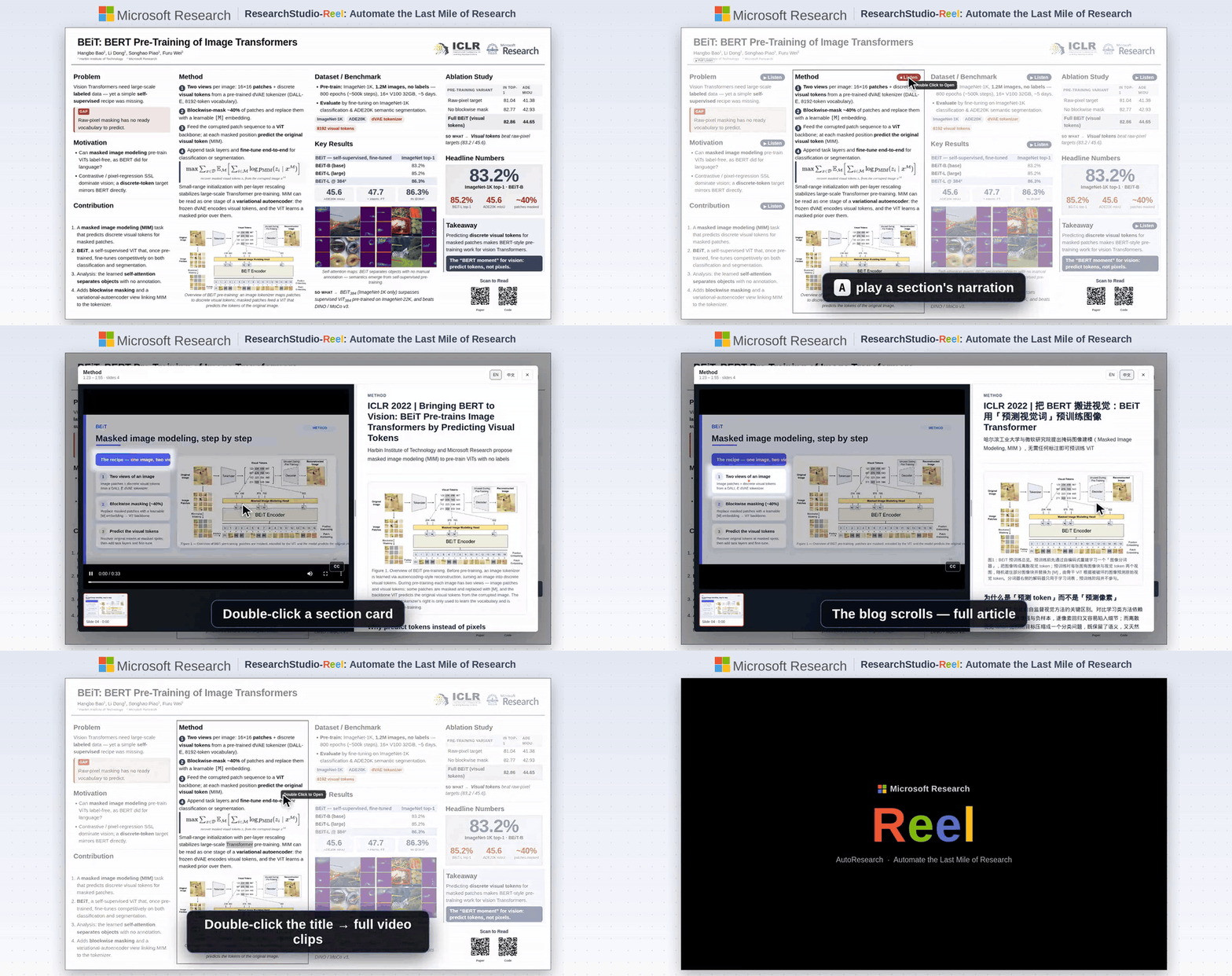
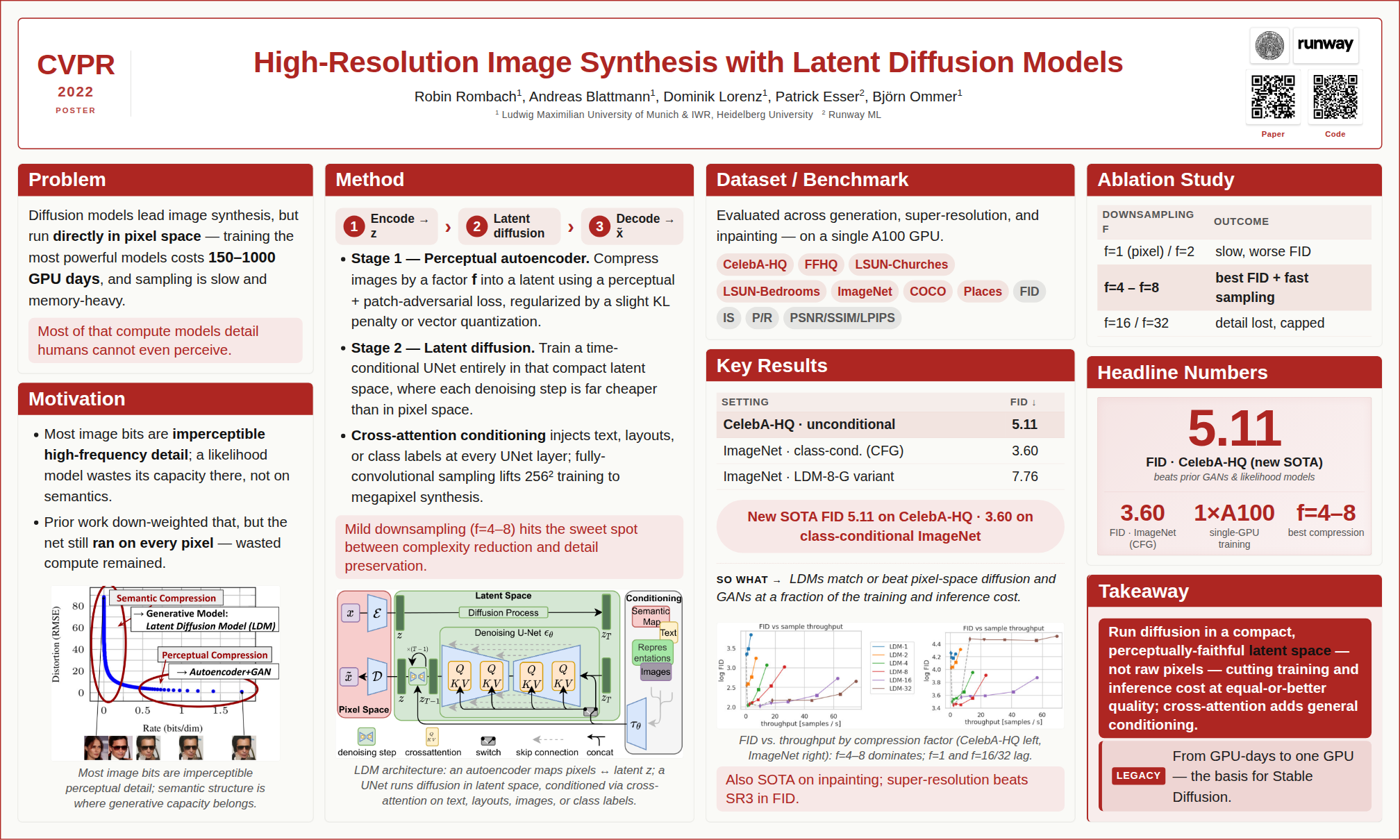
ResearchStudio streamlines the final steps of a research project — the materials a paper needs after the writing is done. Drop in one PDF and get back the artifacts that turn a paper into a conference submission and a public release: a structured asset bundle, a print-ready poster, a narrated walkthrough video, a bilingual blog post ready for an editor, and an interactive reel viewer.
|
|
| Paper2Reel — presenting an interactive reel. | Paper2Poster — building a poster from one PDF. |

This is an automated message from the Librarian Bot. I found the following papers similar to this paper.
The following papers were recommended by the Semantic Scholar API
- OmniPresent: Generating Coherent Presentation Suites from Scientific Papers (2026)
- PosterHarness: Turning Scientific Poster Generation into an Auditable Instruction-Following Benchmark (2026)
- Demonstrating chart-plot: Closing the Last Mile of Academic Chart Generation (2026)
- Any2Poster: Any-Source Poster Generation Across Modalities and Domains (2026)
- Cookie-Bench: Continuous On-screen Key Interaction Evaluation for Web Generation (2026)
- How Far Are We From True Auto-Research? (2026)
- Skill-as-Pseudocode: Refactoring Skill Libraries to Pseudocode for LLM Agents (2026)
Please give a thumbs up to this comment if you found it helpful!
If you want recommendations for any Paper on Hugging Face checkout this Space
You can directly ask Librarian Bot for paper recommendations by tagging it in a comment: @librarian-bot recommend


Get this paper in your agent:
hf papers read 2607.04438 Don't have the latest CLI?
curl -LsSf https://hf.co/cli/install.sh | bash Models citing this paper 0
No model linking this paper
Datasets citing this paper 0
No dataset linking this paper
Spaces citing this paper 0
No Space linking this paper